
Learn the Pros, Cons, and Must-Know Information
Instant Article Synopsis:
- Perennial ryegrass sprouts in days but grows in clumps, so bare spots need overseeding to fill back in
- Works well in mild, moist regions and is frequently used for patching areas or winter overseeding
- Needs more nitrogen, frequent mowing at 1.5 to 2.5 inches, and consistent watering than many other cool-season grasses
- In Ohio and Michigan, it performs best as part of a blend
- Reach out to NexGreen to learn more about lawn seeding
Attributes of Perennial Ryegrass
If you’ve ever admired a deep green lawn with fine, glossy blades and wondered what it is, there’s a good chance you were looking at perennial ryegrass. It’s a cool-season grass that shows up everywhere from golf course fairways to backyard lawns. It’s popular in the Midwest for patching, overseeding, and quick greenery.
Perennial ryegrass isn’t for every lawn or situation. It’s not a “plant it and forget it” kind of grass. Before you grab a bag of seed, it helps to understand what it does well, where it struggles, and how it fits into Ohio and Michigan lawns.
- Native to Europe and Asia, perennial ryegrass is a bunch-type grass. That means it grows in upright clumps (called tillers) instead of sending out runners like Kentucky bluegrass or Bermuda.
- It doesn’t spread sideways, so bare spots won’t fill in on their own. You have to overseed them.
- You’ll see it on home lawns, sports fields, and even pastures.
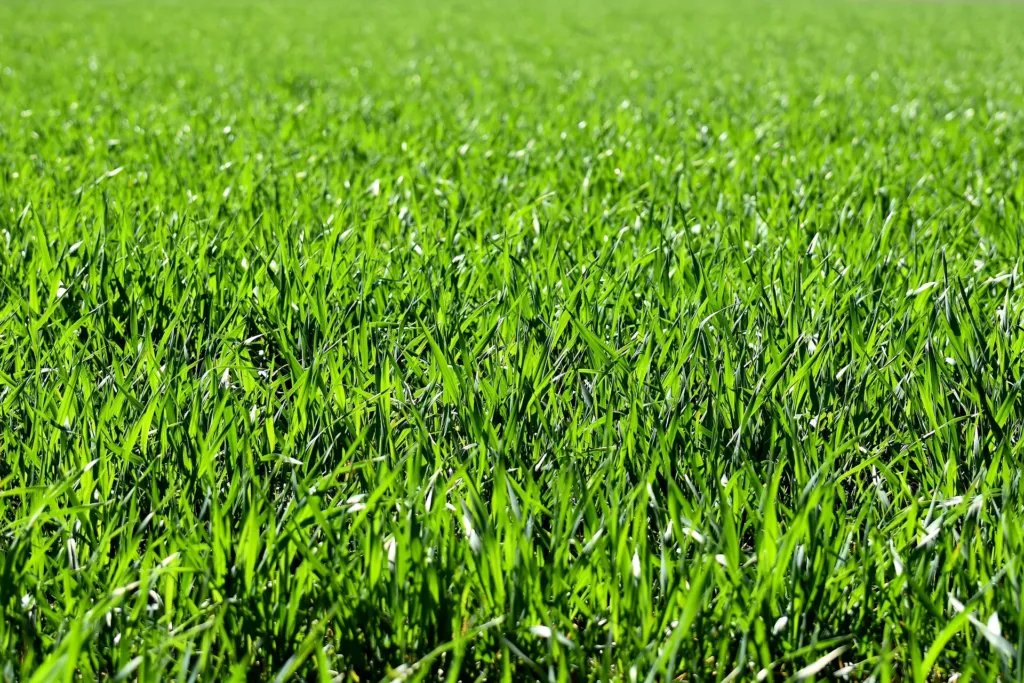
- It has a distinct look of fine blades, dark green to blue-green color, glossy undersides, and a ridged top. The leaf tips are pointed, almost like the bow of a speedboat, and new leaves fold in the shoot rather than rolling up.
How It Compares to Other Grasses
Perennial vs. Annual Ryegrass
Both germinate fast, which makes them great for quick cover. But annual ryegrass dies off after one season, while perennial ryegrass comes back year after year in the right climate.
These days, perennial ryegrass has largely replaced annual ryegrass for winter overseeding in the South because it holds color and texture better through cooler months.
Pro tip: Always read the seed label carefully. Annual and perennial ryegrass are often mixed up at the store, and that mistake can cost you a full season of results.
Perennial Ryegrass vs. Tall Fescue
Tall fescue is the tougher cousin. It handles heat, drought, and a wider range of climates with less fuss.
Ryegrass, on the other hand, germinates faster, has a finer texture, darker color, and stripes beautifully when mowed. It also tolerates shorter mowing heights.
Both are bunch-type grasses, so neither repairs itself. In Ohio and Michigan, tall fescue is often the safer choice for a full lawn, but a mix of the two can give you the best of both…ryegrass for looks, fescue for resilience.
Perennial Ryegrass vs. Kentucky Bluegrass
Ryegrass wins the speed race. It germinates in days, while bluegrass takes weeks. But bluegrass spreads through rhizomes, so it fills in bare spots on its own.
Ryegrass produces less thatch and handles low mowing better, but bluegrass usually beats it in extreme cold.
That’s why many seed blends combine them: ryegrass for fast coverage, bluegrass for long-term repair.
The Upsides of Perennial Ryegrass
- Germinates fast. In as little as 4–6 days, you’ll see sprouts. Within two weeks, you can have 60% coverage.
- Looks sharp. That dark color and fine texture give a manicured, professional feel.
- Handles traffic well. Great for kids, pets, and sports.
- Low thatch. You won’t need to dethatch often, which saves work.
The Downsides of This Cool-Season Turf
- No self-repair. Since it’s a bunchgrass, thinning patches stay thin unless you overseed.
- Hungry for nitrogen. It needs more fertilizer than most cool-season grasses, which also means more mowing.
- Shade-intolerant. Dense shade leads to thin, weak turf, unlike other grasses that thrive in shade.
- Summer stress. In Ohio and Michigan, hot stretches can push it into dormancy or kill it outright if conditions are harsh enough.
Does Perennial Ryegrass Die in the Summer?
It depends. In northern lawns, it might just go semi-dormant during a heat wave. That means a brown appearance, but it won’t actually be dead. In southern overseeded lawns, summer heat usually finishes it off, which is expected.
For Michigan and Ohio homeowners, the outcome varies. Improved cultivars handle heat better than older varieties. Deep watering and raising the mowing height during hot spells can help it survive.
If summer drags on with high heat and humidity, don’t be surprised if it thins out. Tall fescue is generally the more reliable choice through sustained summer stress.
Where Perennial Ryegrass Fits in Ohio and Michigan
Perennial ryegrass works best as part of a mix in the Midwest, not as the only grass in your lawn. It’s great for:
- Patching bare spots because it fills in fast.
- Overseeding thin areas in fall or spring.
- Adding visual appeal to a blend with Kentucky bluegrass or tall fescue.
But as a permanent, standalone lawn? It can struggle with Midwest winters and humid summers. Many homeowners in Ohio and Michigan find it performs better when blended with other grasses that handle temperature swings more reliably.
Planting Perennial Ryegrass
When to Plant
Early fall is the sweet spot (about 45 days before the first frost). Soil temperatures between 50°F and 65°F give you the best germination. Spring is your second-best window.
For overseeding warm-season lawns (like Bermuda), wait until the grass starts browning in fall.
How Much to Seed
Plan on about 6–8 pounds per 1,000 square feet. Keep the seedbed consistently moist with light, frequent watering until you see good coverage, then switch to deeper, less frequent watering.
Caring for an Established Lawn
Watering
About 1 inch per week in spring and fall, up to 1.25 inches in summer. Deep, infrequent watering encourages roots to grow deeper, which helps with drought tolerance.
Fertilizing
Ryegrass is a heavy feeder. Expect to apply 4–8 pounds of nitrogen per 1,000 square feet per year, depending on your soil and turf density.
Not sure when to fertilize?Time applications with the seasons: early spring for crabgrass prevention, late spring for weed control, split summer feedings, and a solid fall dose about six to eight weeks before frost.
Mowing
Keep it at 1.5–2.5 inches during active growth. In summer heat, raise it to 3–4 inches to reduce stress. Never cut more than a third of the blade at once, and keep your mower blades sharp—dull blades tear the leaves and invite disease.
Soil and Thatch
Test soil every few years and aerate compacted areas as needed. Thatch buildup is rarely a problem with ryegrass, which is one less thing to worry about.
Pests, Diseases, and Thinning
Ryegrass can fall victim to red thread, pink patch, crown rust, leaf spot, and grey leaf spot. This is especially the case in hot, humid summers. Snow mold can also be an issue where snow lingers.
On the pest side, watch for grubs, billbugs, sod webworms, and chinch bugs. These lawn pests can destroy your yard quickly, sometimes without ever being seen.
Because it doesn’t spread, thinning is inevitable over time. High-traffic areas may need annual overseeding just to stay dense.
Seasonal Care at a Glance
- Spring (March–May): Resume mowing at 1.5–2.5 inches, apply crabgrass preventer, water about 1 inch weekly.
- Summer (June–August): Raise mowing height to 3–4 inches, split fertilizer applications, water up to 1.25 inches weekly, and watch for heat stress.
- Fall (September–November): Prime time for seeding and overseeding. Apply fall fertilizer six to eight weeks before frost. Aerate and clear leaves.
- Winter (December–February): In southern lawns, keep mowing and watering. In northern areas, mostly rest—just clear debris and watch for snow mold.
Common Questions
Trust Your Lawn Care Seeding to the Pros
Perennial ryegrass can be a great addition to an Ohio or Michigan lawn. However, it works best as part of a plan, not as a cure-all. Use it where you need fast results, sharp looks, or winter color. Just be ready to feed it, mow it, and overseed it regularly.
If you’re not sure which grass is right for your yard, or if you’d rather hand off the work to someone who does this every day, that’s where we come in. NexGreen offers pest control and lawn care services in Ohio communities around the areas of Westerville, Columbus, and Groveport, OH.
We also provide pest control and lawn care services in Michigan for areas near Sterling Heights, Rochester Mills, and Waterford, MI.