
Learn the Important Dos & Don’ts of Shredding Leaves on Your Lawn
Key Points Covered:
- Mulching (shredding fallen leaves with a lawn mower) returns nutrients to the soil, supports lawn biology, and takes less time than raking
- The trees in Ohio and Michigan drop lots of leaves quickly, which makes frequency the most important factor in your mulching approach
- Weekly passes through October keep the process manageable, while falling behind by even two weeks makes recovery harder
- Wet leaves, diseased foliage, thick layers, and a history of snow mold are the four conditions where raking is the right call
- Leaves left under snow compact into a mat that damages turf and invites spring fungal problems
- It’s important to complete your last mulching session before snow and ice arrive
- Get the best lawn care and pest control in every season by trusting the professionals at NexGreen
What’s Happening When You Mulch Leaves?
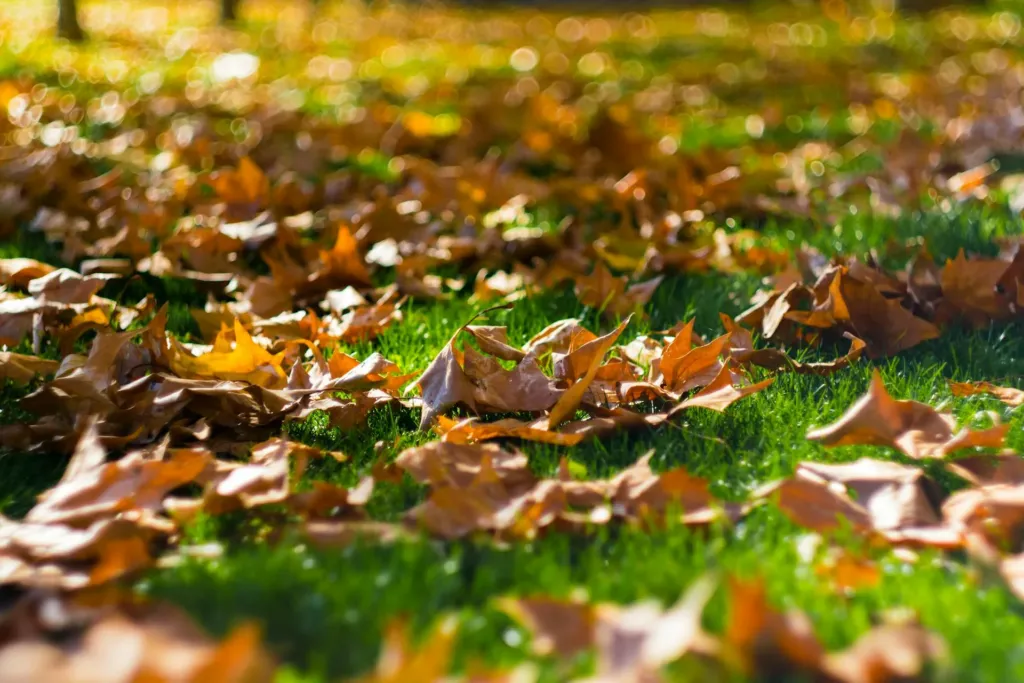
You run the mower over fallen leaves, the blade chops them into small fragments, and those pieces fall back through the grass canopy to rest at the soil surface. Nothing gets bagged. The material stays on your property and starts working.
Within a few weeks, those fragments begin breaking down. As they do, they release nitrogen, phosphorus, and potassium directly into the root zone. Those are the same nutrients in bagged fertilizer!
Plus, earthworms, soil fungi, and microbial communities all feed on organic material decomposing at the surface. As those populations grow, they improve the physical structure of the soil, letting water, air, and nutrients get absorbed more efficiently.
There’s also a weed suppression benefit. The layer of decomposing material limits light exposure to weed seeds sitting at the soil surface. Crabgrass, dandelions, and most common Ohio and Michigan lawn weeds require light to germinate.
Mulching doesn’t replace a pre-emergent herbicide program, but it contributes to the same outcome without any additional product or effort. Keep reading to learn more from the expert team at NexGreen!
Unique Challenges of Fall in Ohio and Michigan
The timing and volume of leaf drop in these two states is different from what homeowners in milder or more gradually changing climates experience.
Sugar maples, red maples, oaks, ashes, and elms (the dominant canopy trees across Ohio and Michigan) tend to hold their leaves through October and then release them in a two-to-three-week window once night temperatures consistently drop into the 40s.
The total volume isn’t necessarily greater than what a homeowner in a more gradual climate manages. However, the timeline is shorter and the buildup of leaves happens much more quickly.
The Great Lakes compounds this. The lake-effect moisture patterns that affect northwest Ohio and much of Michigan’s Lower Peninsula mean that fall often arrives with elevated humidity and periodic rain events that keep fallen leaves damp longer than in drier inland areas. That can create a wet-leaf problem, making mulching ineffective and sometimes counterproductive.
The cool-season grasses here (Kentucky bluegrass, tall fescue, and perennial ryegrass) are actively growing and storing carbohydrates through October. That biological activity makes fall the single most important fertilization and nutrition window of the year.
Mulching during that period returns organic nutrients exactly when the root system is most capable of using them.
Of course, snow and ice will arrive before you know it. And when leaves are left under a snowpack, they compress against the turf and remain there through the freeze-thaw cycles of a Midwest winter.
By the time that mat becomes accessible in March or April, it has already restricted airflow, blocked light through the dormant season, and created the moisture-rich, low-airflow conditions that snow mold thrives in.
Removing that mat in spring without damaging emerging turf is harder than removing the leaves in November would have been.
When to Mulch vs When to Rake
Mulching isn’t always your best option. Same goes for raking. Mulching handles most situations well, and raking is appropriate in a specific set of conditions.
Mulch when these are true:
Leaves are dry. This is the most controllable variable in the entire process. Wet leaves don’t fragment cleanly. They clump under the mower deck, stick together in matted chunks, and clog the discharge.
In Ohio and Michigan, where fall rain can keep leaves damp for days, you should target dry afternoons after a clear stretch. The difference between dry and wet mulching is noticeable enough that waiting an extra day is almost always worth it.
Coverage is light to moderate. After a mulching pass, you should still be able to see roughly half the grass surface through the shredded fragments. If the lawn is still mostly obscured after the mower goes over it, the session processed more than it could handle in a single pass.
The lawn is established. Mature turf integrates shredded leaf material without difficulty. Newly seeded sections and recently installed sod need full light exposure and good airflow during establishment, so mulch will either slow or disrupt that process.
You can stay consistent. A yard where the mower passes over accumulated leaves once a week through peak season stays manageable. The same yard left for two or three weeks between sessions faces a volume problem that a single session often can’t fully resolve.
Rake when these conditions apply:
The accumulation is too deep. Four to six inches of loose leaves is the upper limit of what a mower can handle. Above that, your mower is more likely to compress material into a mat than to shred it.
Leaves show signs of disease. Fungal leaf spot, powdery mildew, and similar infections don’t die with the leaf. Shredding and distributing visibly diseased material across the lawn keeps those pathogens active and in contact with the turf. Removal is the safer call when this is the case.
Snow mold has appeared in previous springs. The gray or pink fungal patches that appear as snow recedes in March develops specifically in conditions where thick organic material was present against the turf under the snowpack. A lawn that has experienced snow mold is more vulnerable to it recurring, and thorough late-fall leaf removal meaningfully reduces the conditions that allow it to establish.
The property drains toward a water feature. Waterways can be affected by phosphorus runoff. Even nutrients that benefit a lawn cause algae problems in water bodies. Yards draining toward any water feature should keep leaf material away from those drainage paths.
Six Steps for Better Results
- Choose a dry window. Dry leaves on dry turf, low humidity, calm afternoon. If rain came through recently and leaves are still matted and damp, waiting produces better results in less total time than fighting wet conditions.
- Keep the mower at fall cutting height. Kentucky bluegrass, tall fescue, and perennial ryegrass all perform best at 3 to 4 inches through fall. That height should be maintained through leaf season regardless of what’s on the surface. Lowering the blade to gain extra leaf contact does more harm to the turf than it does good for the leaf fragments.
- Take off the collection bag before you start. The purpose of mulching is returning chopped material to the lawn surface. A collection bag catches exactly what the process is supposed to leave behind. It’s a simple detail that’s easy to overlook and consistently worth checking before the first pass.
- Reduce mowing speed. Slow and steady wins the mulching race. And more time under the blade produces finer fragments. A slower mowing pace improves fragment quality and reduces clogging, particularly with larger-leafed species like sugar maple and white oak.
- Check the result after the first pass. Fragments should be roughly dime-sized or smaller, with grass visible through them. If the surface is still mostly covered or pieces are too coarse, make a second pass at a 90-degree angle to the first.
- Stop before the mower starts making things worse. If the lawn is still smothered after two passes, continuing will compress material rather than shred it. Rake the excess into garden beds or a compost pile and return to the remaining lawn in the next scheduled session. Knowing when to stop is as useful as knowing the technique itself.
Troubleshooting the Most Common Problems
Lawn looks patchy or compressed after mulching. Too much material for the session to process into fine fragments. Rake the densest patches by hand, shorten the interval before the next session, and try running at a slightly higher blade height.
Mower clogging or losing power mid-pass. Wet leaves or excessive depth, frequently both at once. For wet conditions, stop and let things dry before continuing. For excessive depth, use a leaf blower to spread the pile more thinly across a wider area before mowing.
Leaf mat still present after two passes. Sugar maple and white oak leaves are among the larger, denser species that resist shredding more than thinner leaves. One additional pass at a third angle typically resolves it. If the mat persists after that, rake the remainder into garden beds.
Snow mold visible in spring. The underlying cause is almost always organic material that remained against the soil surface under snow. This requires a fall correction, not a spring one: increase mulching frequency during peak drop, and complete a thorough final pass before the first significant snowfall arrives.
Answers to Common Questions
There’s Mulch to Do This Fall & Beyond!
Leaf management is an important part of maintaining healthy cool-season grass. In addition to mulching leaves, your lawn care routine should include weed control, fertilization, aeration, overseeding, and pest control. Of course, each of those tasks happens at different times throughout the year.
Want to take your lawn to the next level? NexGreen offers pest control and lawn care services in Ohio communities around the areas of Westerville, Columbus, and Groveport, OH.
We also provide pest control and lawn care services in Michigan for areas near Sterling Heights, Rochester Mills, and Waterford, MI.