
Are the Pests Near You Dangerous or Harmless?
There’s hardly anything more irritating than stepping outside to enjoy some fresh air, only to hear that high-pitched whine and feel the sharp sting of a mosquito bite. Within minutes, you’re covered in itchy red bumps that’ll bother you for days. But here’s something you might not know: Mosquitoes aren’t all the same.
Some types of mosquitoes are just nuisance biters looking for their next blood meal, while others? They’re carrying potentially dangerous diseases. And believe it or not, some don’t even pose a threat to humans at all.
Let’s dive into what the pest control professionals at NexGreen want you to know about identifying dangerous mosquitoes and telling them apart from their harmless cousins.
How Many Species of Mosquitoes Are There? 
Globally, we’re looking at more than 3,000 different mosquito species. Out of that massive number, roughly 200 species have made their homes across the United States. Now, before you start browsing real estate listings in Antarctica to escape the problem, just know that only a small percentage of these mosquitoes actually pose legitimate health threats.
When experts categorize mosquitoes, they typically use four primary groups: Aedes, Culex, Anopheles, and Culiseta. Each group comes with its own set of characteristics: when they prefer to bite, which creatures they target, what diseases they might carry, where they like to breed, and which parts of the country they inhabit.
In fact, plenty of mosquitoes don’t even feed on human blood. Their preferences might be birds, various mammals, or they might skip biting altogether.
-
Aedes Mosquitoes
This particular genus has become exceptionally well-suited to living alongside humans. What makes them especially bothersome is their daytime activity. Unlike numerous other mosquito types, they don’t wait for dusk.
Whether you’re tending your garden or firing up the grill, these pests can absolutely ruin your plans. Even worse? They prefer feeding on people rather than animals.
Yellow Fever Mosquito
- Found mostly in the Southeast and Southwest U.S., along the Mid-Atlantic, and in parts of California
- Known for transmitting Zika, Dengue, Chikungunya, and Yellow Fever
- Breeds in artificial containers and urban environments (tires, flower pots, buckets, birdbaths, etc.)
- Thrives during warm, humid months
Asian Tiger Mosquito
- Recognized by its striking black-and-white markings
- Persistent, aggressive biting behavior during the daytime
- Not native to the United States and can survive in cooler climates, which has allowed it to spread across the Southeast, Midwest, Northeast, and Pacific regions
- Breeds in tires, containers, and shaded areas
Eastern Saltmarsh Mosquito
- Breeds in salt marshes and coastal wetlands along the Atlantic Coast and Gulf Coast
- Can travel up to 40 miles from its breeding site
- Extremely aggressive biter during the day and at night
- Not typically a major disease spreader
-
Anopheles Mosquitoes
With roughly 450 species worldwide, these nighttime biters are the only mosquitoes capable of transmitting human malaria.
Common Malaria Mosquito
- Historically, this species was responsible for malaria transmission in the U.S.
- Breeds in freshwater bodies with vegetation (ponds, swamps, marshes, and slow-moving streams)
- Found mainly in the Eastern U.S., Midwestern, and Southeastern states
-
Culiseta Mosquitoes
These mosquitoes don’t get much attention, mainly because their habitat is restricted to colder climates. They’re also regarded as presenting minimal danger to people.
Common Characteristics of Culiseta Mosquitoes
- Prefer cooler temperatures and are often active in early spring or fall when other species are less prevalent
- Breed in snowmelt pools, woodland ponds, and cold, stagnant water
- Found mostly in the Northern U.S., higher elevations, and parts of Canada
-
Culex Mosquitoes
Members of this group favor nighttime feeding patterns, from twilight through sunrise. These are the classic house invaders we associate with hovering around dirty or stagnant water sources (drainage systems, sewage areas, abandoned swimming pools, etc.).
What makes them particularly concerning is their role as the main transmitters of West Nile virus throughout America.
Southern House Mosquito
- Found throughout the Southern U.S.
- They like breeding in nutrient-rich standing water
- Known for transmitting West Nile virus, St. Louis encephalitis, and canine heartworm.
Northern House Mosquito
- Hibernates during winter inside (basements, crawl spaces, and attics) and outside (animal burrows, tunnels, and logs)
- Thrives in urban and suburban environments, particularly in warm and tropical climates
- Uses man-made structures, laying large numbers of eggs in sewers, retention ponds, storm-water catch basins, ground pools, and wastewater containers
Western Encephalitis Mosquito
- Found in the Midwest and Western states
- Delivers a more painful bite than its relatives
- Can breed at elevations up to 10,000 feet, making it a concern even in mountainous regions
What Diseases Are Mosquitoes Spreading?
Zika: Sporadic regional outbreaks, primarily spread by Aedes aegypti and Aedes albopictus varieties.
Malaria: Uncommon within U.S. borders but remains possible via local Anopheles mosquito transmission.
West Nile Virus: America’s most common mosquito-transmitted illness, mainly carried by Culex species.
Dengue: Also spread by Aedes mosquitoes, with periodic outbreaks in southern territories.
Yellow Fever: Mostly a concern for travelers, although Aedes aegypti populations do exist domestically.
Chikungunya: Less frequently seen but still worrisome, another Aedes-transmitted disease
Why Do Certain Mosquitoes Bite While Others Don’t?
Here’s an interesting truth that surprises most people: Male mosquitoes never bite! They’re completely satisfied feeding on nectar, plant fluids, and honeydew. Female mosquitoes, however, require blood to develop their eggs.
How do females locate their targets? They can sense carbon dioxide released by warm-blooded creatures from considerable distances. While flying toward potential hosts, they rely on their eyesight, humid air currents emanating from the host, and distinctive human odors to target their victims.
Female mosquitoes are generally attracted to warm-blooded species. Their usual victims include birds and mammals, although some species extract blood from reptiles and amphibians.
Most female mosquitoes restrict their feeding to specific times during the day-night cycle. Blood meals happen most frequently during twilight hours extending into early evening, though they’ll also feed during warm morning periods and overcast days.
Mosquito Warning Signs You Should Watch For
Clearly, encountering mosquito swarms and suffering bites warrants calling your neighborhood pest control professionals. You shouldn’t have to endure clouds of biting insects destroying your outdoor enjoyment. However, certain less obvious indicators suggest mosquito presence or attraction.
- Weather patterns. Hot, muggy conditions prolong mosquito season and boost population numbers.
- Standing water sources. Additional breeding locations translate directly to increased mosquito numbers.
- Travel history. When you or household members have recently visited regions with endemic mosquito-borne illnesses, stay extra alert for symptoms following bites.
- Local disease reports. Monitor public health notifications regarding West Nile virus or similar mosquito-transmitted diseases in your community.
Strategies for Mosquito Prevention & Management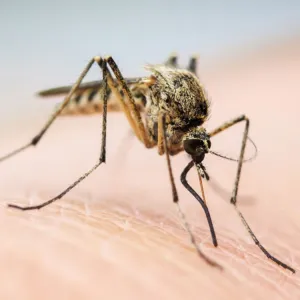
Successfully controlling mosquitoes demands multiple coordinated strategies working together.
Pinpointing breeding locations is critical since different species select different habitats. Culex varieties thrive in contaminated water found in storm drains. Aedes types favor clean container water. Anopheles mosquitoes require vegetated freshwater. Understanding your specific mosquito species helps you focus on appropriate breeding sites.
Being seasonally aware helps optimize your timing. Throughout most American regions, mosquito season spans spring through fall, peaking during summer months. However, in warmer southern states, these pests remain active year-round.
Disrupting habitats serves as your primary defense. Remove standing water whenever feasible to prevent larval development. Make efforts to refresh birdbath water weekly, maintain clean gutters, remove any abandoned items from your yard, and ensure outdoor furniture drains properly. Keep in mind that mosquitoes can reproduce in surprisingly minimal water quantities. Even a forgotten bottle cap outside can launch a new generation of these flying pests.
Chemical control becomes necessary when preventative or do-it-yourself methods prove inadequate. Apply insecticides targeting adults and/or larvae as needed, always following label directions. Relying on professional pest control specialists guarantees insecticides get applied with maximum effectiveness.
Personal protection matters too. You should dress in protective, light-colored, loosely-fitted garments and apply EPA-approved repellents. When feasible, stay indoors during peak mosquito activity periods and locations.
How Professionals Identify Common Mosquito Species
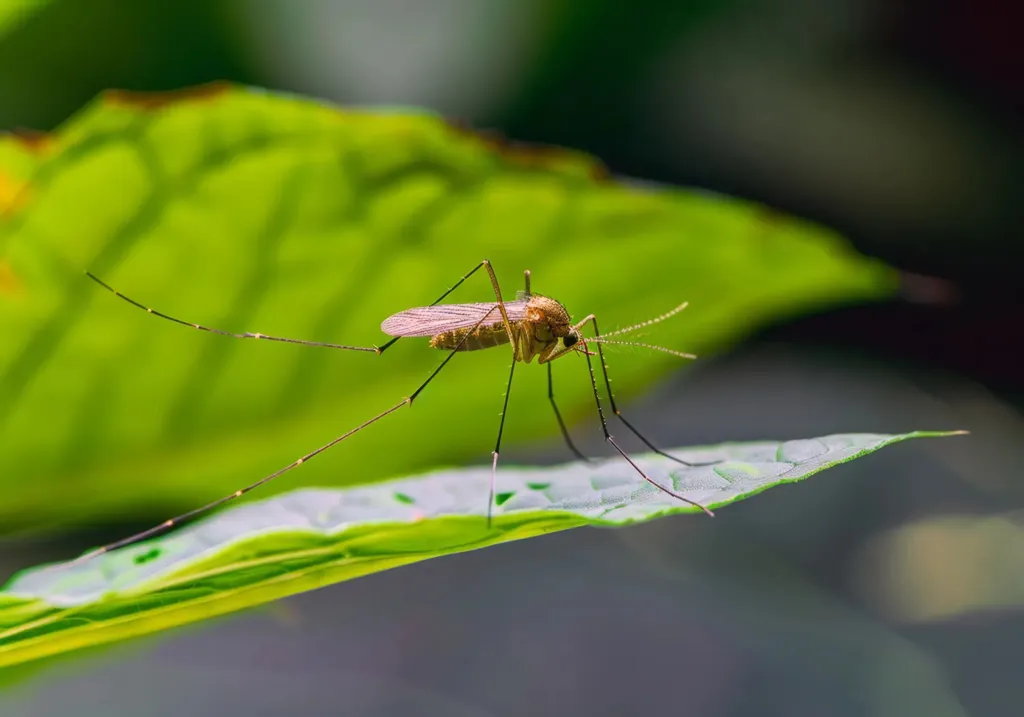
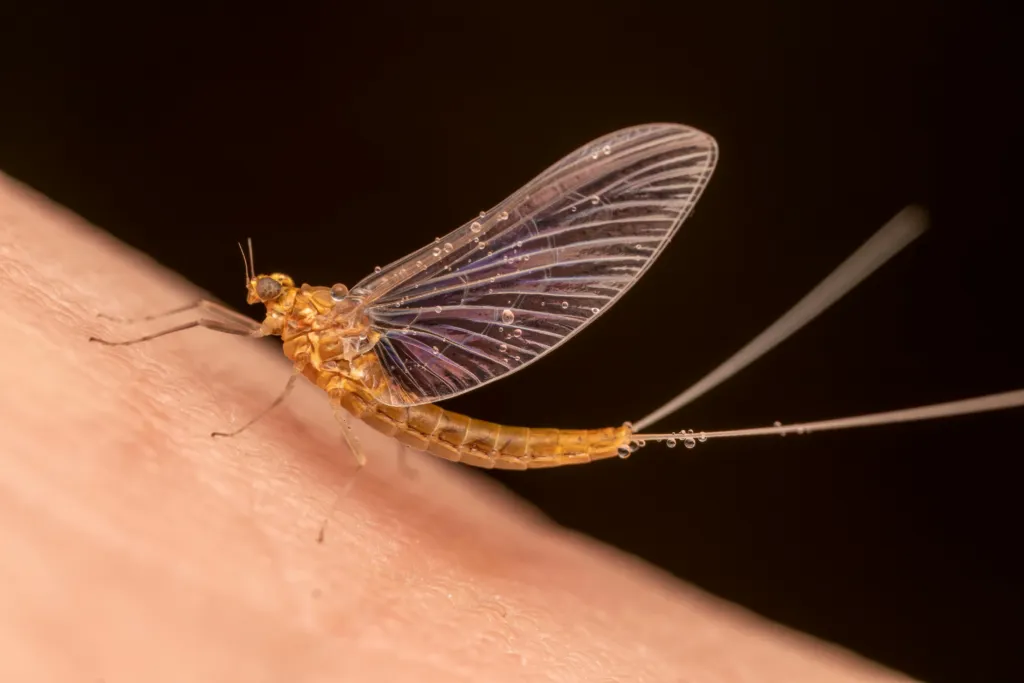
Misidentifying mosquitoes happens all the time, even among media outlets and news organizations. That “mosquito” featured in a nature documentary could easily be a crane fly (which is completely harmless). So what methods do professionals use for distinguishing these minuscule insects?
Experts Use the “Three Ps” to ID Mosquitoes
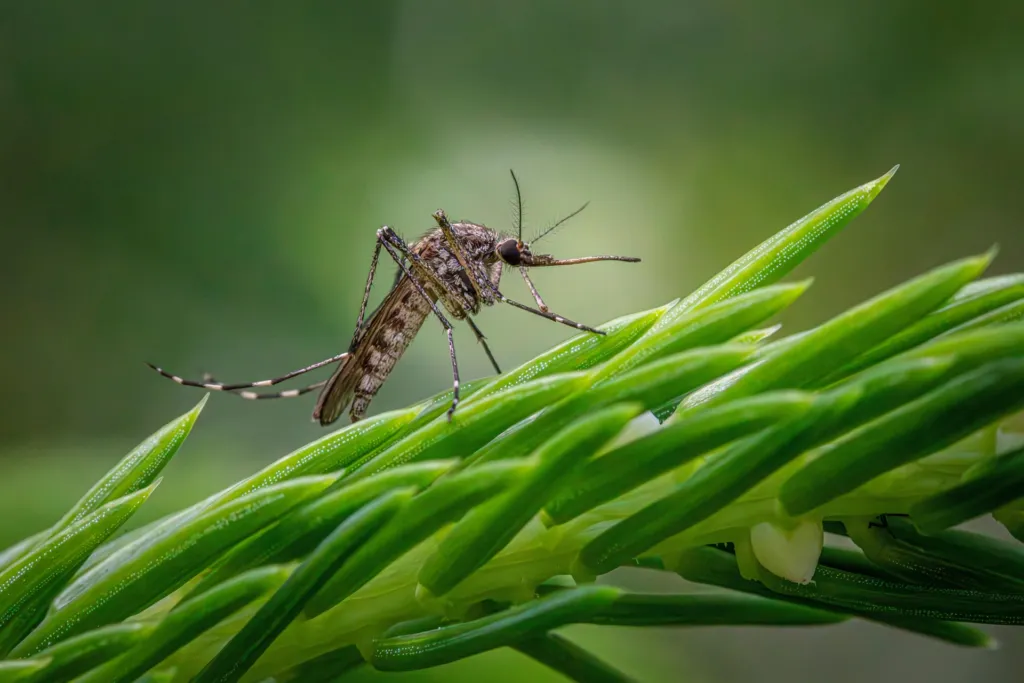
Pattern. Examine the insect’s color scheme. Black-and-white striped patterns, particularly on legs, typically indicate Aedes species. More consistent coloring, such as brown or gray tones, probably means you’re seeing a Culex or Anopheles mosquito.
Palps. These sensory appendages sit near the mosquito’s mouth area. On Anopheles mosquitoes, palps appear long and noticeable, approximately matching the proboscis length. Aedes and Culex mosquitoes display considerably shorter palps.
Posture. This actually provides one of the simplest identification methods. Resting Anopheles mosquitoes maintain a straight-line body position (with abdomen tilted upward). Conversely, Aedes and Culex mosquitoes adopt a hunched “V” configuration while resting.
Eliminate Those Annoying Mosquitoes!
Top-performing mosquito control programs maximize their effectiveness through customized strategies. Success comes from targeting the particular pests inhabiting our specific area. This approach is remarkably strategic—it encompasses treating water sources to eliminate larvae, actively controlling adult populations, and modifying landscapes to destroy breeding habitats.
Additionally, cutting-edge contemporary solutions can now interrupt the reproductive cycle, preventing development and creating sustained mosquito population reductions around your property.
Ready to protect your home, lawn, or business? Contact NexGreen, and allow us to handle the mosquito spraying so that you don’t have to. We offer pest control and lawn care services in Ohio communities around the areas of Westerville, OH and Columbus, OH.
We also provide pest control and lawn care services in Michigan for areas near Sterling Heights, MI and Rochester Mills, MI.
Blog Contributor: Eric Bernard
Eric Bernard serves as Area Manager for the Columbus and Groveport NexGreen locations, with 24 years of experience. He currently holds licenses in lawn, horticulture, pest, mosquito, vegetation control, and aquatics. His professional insight is shaped by leadership development, technician performance, customer retention, and decades of experience helping teams deliver strong lawn care results.