
Discover What Drives These Short-Lived Pests & How to Prevent Them
Mayflies may creep you out, but they’re essentially harmless. Of course, it doesn’t always feel that way when they start swarming. However, knowing the deeper backstory of their life cycle and anatomy will give you more peace of mind.
If you’re currently dealing with mayflies or just want to know how long they actually live, keep reading! The pest control experts at NexGreen are doing a deep dive on all things mayflies.
Defining What Mayflies Are
Despite the name, a mayfly isn’t technically a fly. Mayflies are actually more closely related to dragonflies. You might hear them called shadflies, lakeflies, or dayflies depending on your corner of Ohio or Michigan. Same insect, just different local vocabulary.
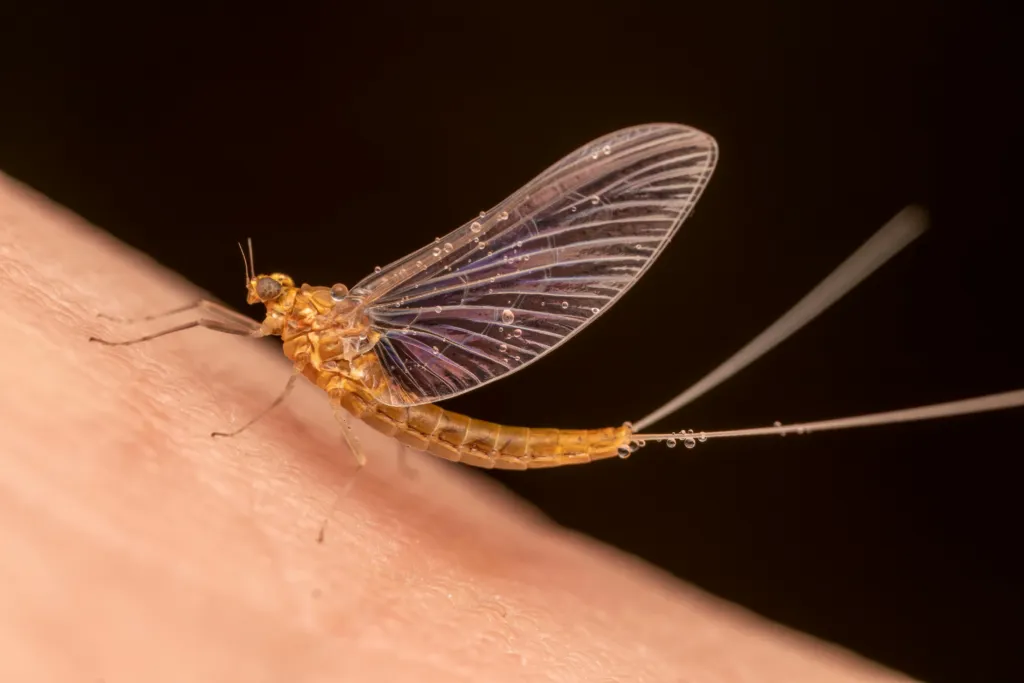
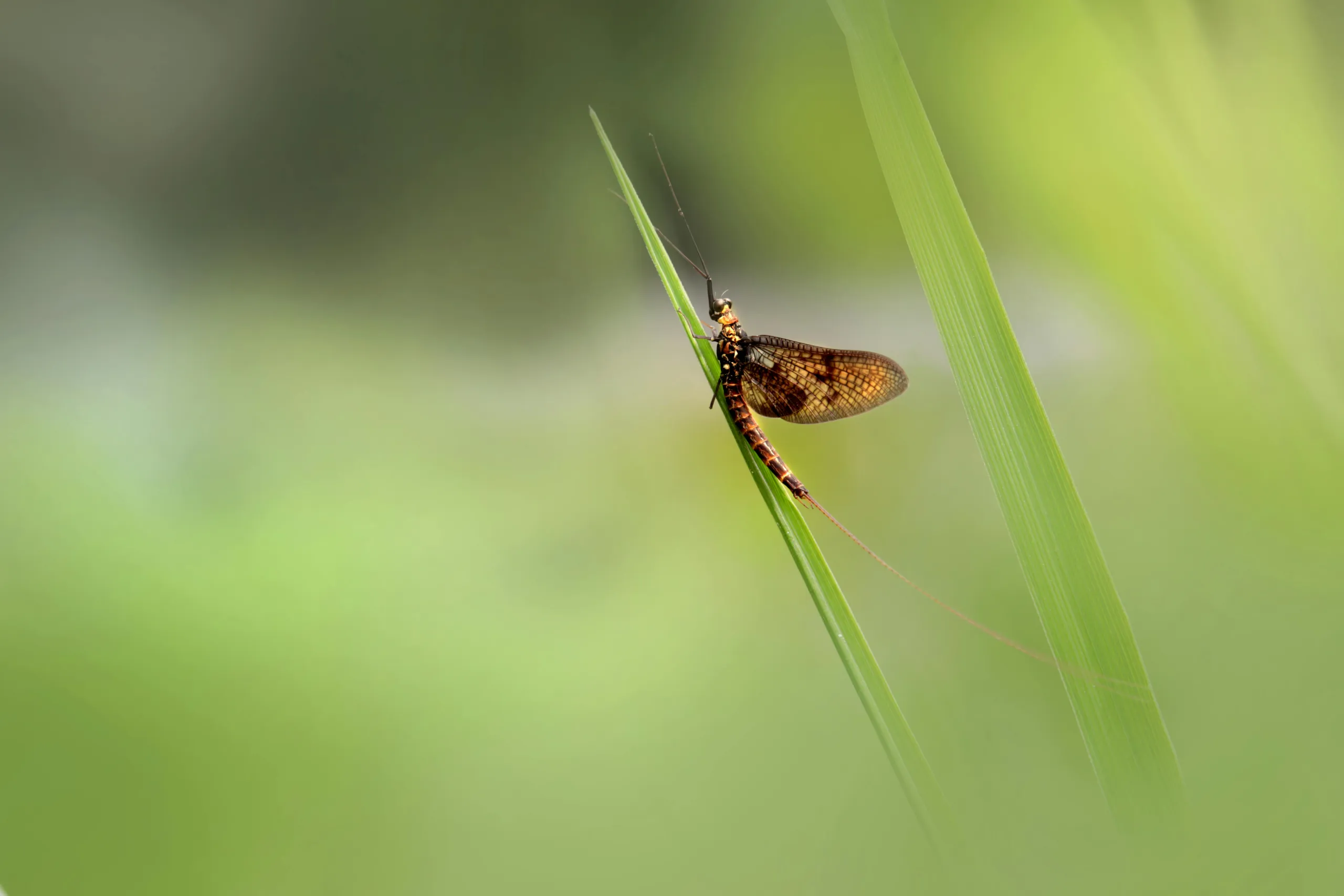
They’re small, about a quarter inch to just over an inch, with a long, tapered abdomen and oversized compound eyes that seem almost too big for their heads.
Four translucent, veined wings rest at a steep upward angle when the insect isn’t flying. That upright wing posture is the fastest way to ID a mayfly. Also, two or three delicate tail filaments extend from the rear of the abdomen.
Ecologically, mayflies matter more than their short lives might suggest. They’re a primary food source for fish, birds, and bats. Plus, scientists use their populations as a water quality indicator. A large, healthy emergence near a local waterway is generally a sign that the water is in good shape.
Explaining the Mayfly Life Cycle
To understand why mayfly swarms happen the way they do, you have to start…underwater.
After eggs are deposited on the water surface and sink to the bottom, they hatch into nymphs that live buried in sediment for anywhere from a few months to two years. It’s a completely hidden existence!
When environmental conditions hit the right combination of warm water temperatures, calm air, and the right point in the season, the nymphs emerge all at once. Thousands of them! They take flight as winged subadults, molt into mature adults, and the swarm begins.
That synchronized mass emergence is what creates the swarms that send Ohio and Michigan homeowners looking for answers.
Most adult mayflies live between 12 and 48 hours from that point. They don’t eat since their digestive systems serve no real function. Every hour is directed toward reproduction. Females deposit somewhere between 500 and 8,000 eggs onto the water. Then it’s over. The eggs sink. The nymphs hatch. The whole cycle restarts.
Do Mayflies Bite? Can They Sting?
No, they genuinely can’t. They lack the mouthparts that would make biting or stinging possible. So a mayfly that lands on your arm is doing absolutely nothing to you.
Ever come away from a swarm with welts or bites? Then something else was responsible. Not a mayfly. Mosquitoes and certain midge species commonly emerge under the same conditions and share the same airspace during peak swarm events. So the biter was probably a mosquito or midge.
Also good to know? Mayflies don’t carry or transmit disease. The annoyances they create are real, but they’re in the “nuisance” category rather than anything medically meaningful.
How Long Do Mayflies Live?
It depends on which stage you’re counting.
The underwater nymph stage lasts anywhere from several months to two full years. Most of a mayfly’s biological life (feeding, growing, and molting) happens during this hidden chapter.
The adult stage, the part you actually witness, lasts 12 to 48 hours for most species. Under ideal conditions some may push to three or four days. But the moment they leave the water, the clock is ticking.
So the honest answer to “How long do mayflies live?” is years in one stage and hours in the other stage.
When & Where to Expect Them in Ohio & Michigan
Ohio and Michigan sit in a zone that experiences significant mayfly emergences, particularly along Lake Erie, the Ohio River, and major inland waterways.
Peak activity here typically runs from late May through July. That’s notably later than the Gulf Coast states, where warmer water temperatures push emergence into April, and somewhat later than the mid-Atlantic. In northern Ohio and Michigan’s Upper Peninsula, the window may arrive in June and happen in a shorter, more concentrated burst.
Warm, calm evenings are the trigger. When a cold front rolls through and drops temperatures, emergence activity can pause.
Year-to-year variation is driven by winter severity, spring rainfall, water temperatures, and larval survival rates. A mild winter followed by a warm, wet spring frequently produces an unusually large hatch.
As adults, mayflies don’t venture far from their emergence site. They’re weak fliers. Light is one of the few things that reliably pulls them away from the water, which is why properties within a mile or so of a lake, river, or pond bear the brunt of swarm activity.
What Draws Mayflies to Your Property?
Still, warm air. Wind suppresses swarm activity fairly effectively. The evenings that feel most pleasant to you are often the ones that produce the densest emergences.
Proximity to freshwater. Geography is the baseline. Properties near Lake Erie, the Maumee River, or any of the region’s larger lakes and ponds are going to see more activity than inland neighborhoods.
Your lights. This is the biggest one. Mayflies navigate using natural light and become disoriented by artificial sources. Bright white and blue-spectrum bulbs are among the most powerful attractants you can have. Warm amber or yellow LED alternatives are significantly less appealing to insects in general.
Reflective surfaces. Pools, glossy car hoods, and polished siding can trigger a landing response because mayflies mistake certain reflected light patterns for water. If your pool lights are running overnight during peak emergence, expect company.
How to Manage Mayflies Around Your Home
You can’t treat the source. Nymphs living in lakes and rivers across the region aren’t reachable by any home pest control approach. The real goal is reducing how many end up on your property.
Rethink your outdoor lighting.
- Switching to warm-toned LED bulbs is the single highest-impact adjustment most homeowners can make.
- Motion-activated fixtures help by limiting how long lights run during peak emergence hours.
- Pointing fixtures downward rather than outward reduces how far the light extends.
Make small adjustments around the house.
- Check and patch screen gaps around doors and windows.
- Close curtains near exterior windows once evening hits to reduce the light signature.
- Run a fan on your porch or patio to create enough airflow and discourage these weak fliers.
Clean up quickly.
- Once a swarm passes, a broom, shop vacuum, or garden hose does most of the work.
- Getting to the carcasses before they start decomposing keeps the odor manageable and eliminates the slip hazard that builds up on smooth surfaces.
Are insecticides effective against mayflies? No, they’re generally not worth it for residential mayfly situations in Ohio or Michigan. The adult window is so short that most products don’t have time to produce meaningful results before the swarm ends on its own.
Telling Mayflies Apart from Similar Insects
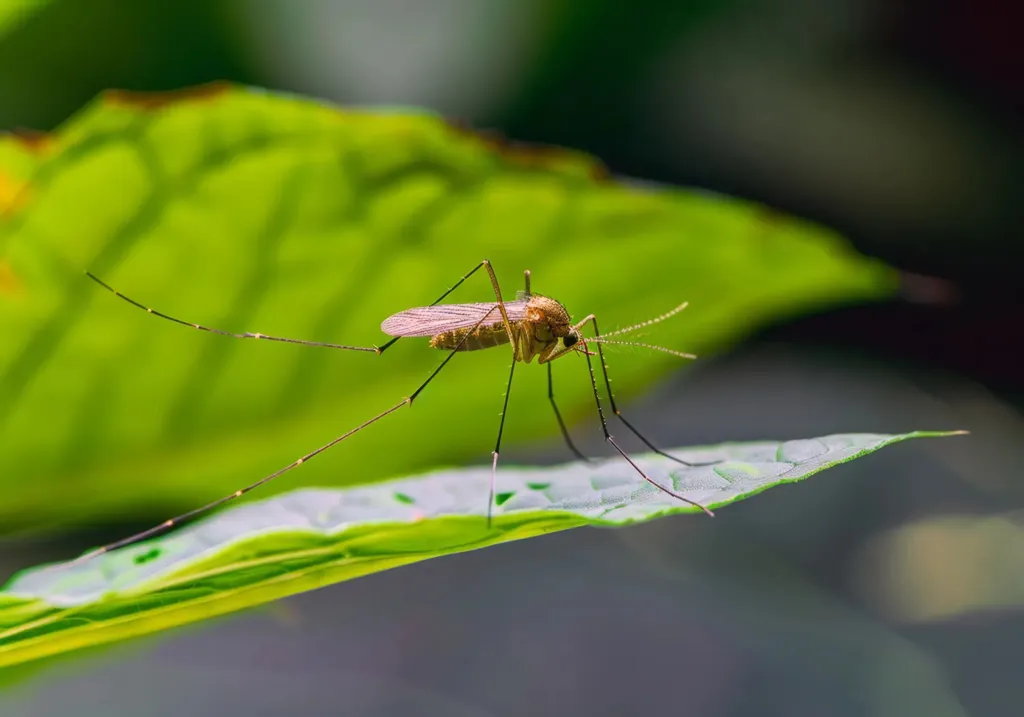
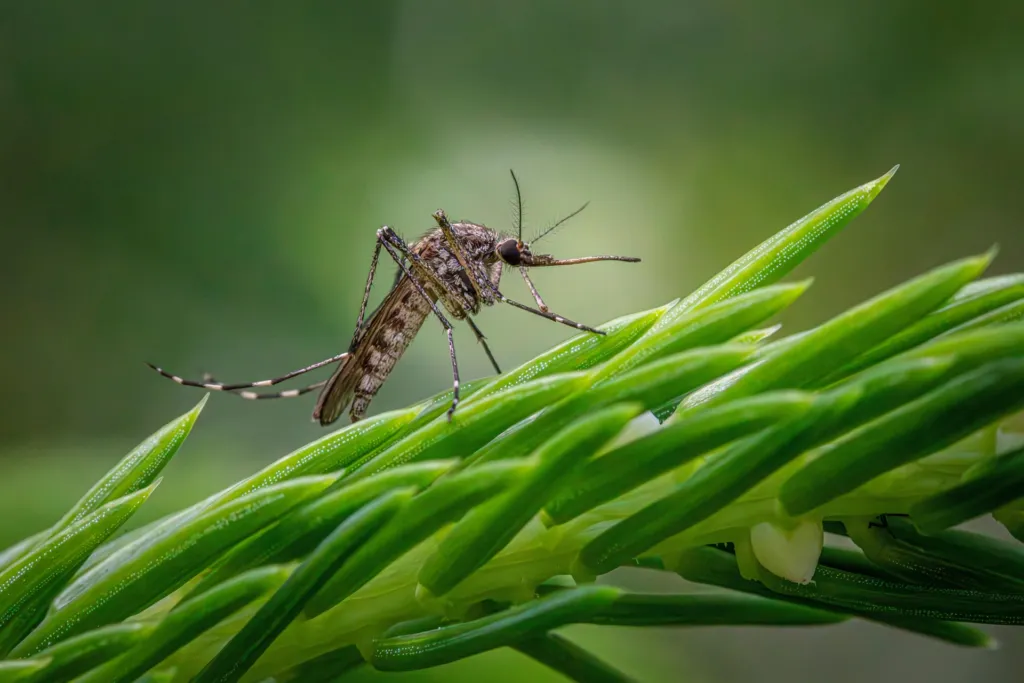
Mayflies vs. mosquitoes. The key difference is that mosquitoes bite and mayflies can’t. Mosquitoes rest with their wings flat against their bodies, while mayflies hold theirs in that distinctive upright position. Also, if you look closely at the head, you’ll see a mosquito’s needle-like proboscis.
Reach out to NexGreen if you need mosquito spraying services!
Mayflies vs. crane flies. Crane flies are the long-legged insects sometimes called “giant mosquitoes,” which isn’t accurate for crane flies either. They’re noticeably larger than mayflies, their wings rest horizontally rather than upright, and they don’t have the trailing tail filaments.
Mayflies vs. midges. Midges are small, swarm near water, and are commonly confused with mayflies. If you’re getting welts during what appears to be a mayfly swarm, midges are almost certainly the actual culprit. Mayflies are generally larger, with that upright wing posture.
When to Call a Professional?
Most mayfly emergences in Ohio and Michigan resolve within a few days without any intervention. For the majority of homeowners, smart lighting choices and fast cleanup are all that’s needed.
There are situations,where professional involvement is worth considering:
- Severe annual swarms that significantly affect how you’re able to use your outdoor spaces, despite consistent management efforts
- Commercial properties where insect accumulation creates safety hazards on walkways, parking lots, or building entrances
- Uncertainty about whether you’re dealing with mayflies, mosquitoes, or midges
NexGreen’s pest control team serves communities in the Midwest. If you’re unsure what you’re dealing with or if a recurring problem has gone beyond what DIY management can fix, we can assess your property, identify what’s present, and recommend an approach suited to your specific situation.
Mayfly Questions & Answers
-
Why do mayflies cluster around lights?
They rely on natural light for navigation. Artificial sources interfere with that system and pull them in.
-
Can mayflies get established inside my home?
No. They don’t breed indoors, have no interest in any indoor resource, and die quickly.
-
How long does a swarm last in Ohio and Michigan?
Peak activity typically runs one to three days.
-
Do they harm lawns or plants?
Adult mayflies can’t feed at all. Their larval stage is entirely aquatic. Your lawn and garden are completely safe.
-
Is a mayfly swarm a sign of water pollution?
It’s actually the opposite. Mayfly populations require clean, well-oxygenated water to develop.
Pests Giving You Issues? Call Us!
Mayflies can be gross and annoying, but the problem is simpler to solve than you’d think, especially when it comes to prevention. Change your outdoor bulbs to warm-toned, clean up any dead mayflies fast, and keep in mind that the swarm is temporary.
If you’re having trouble with mayflies, mosquitoes, or other lawn pests, NexGreen can help you control the insects that are invading your property. Thanks to our expert technicians and top-notch materials, we help create the beautiful lawn you’ve always wanted.
We offer pest control and lawn care services in Ohio communities around the areas of Westerville, Columbus, and Groveport, OH.
We also provide pest control and lawn care services in Michigan for areas near Sterling Heights, Rochester Mills, and Waterford, MI.
Blog Contributor: Joe Sepesi
Joe Sepesi serves as Branch Manager for the Detroit and Waterford NexGreen locations, with 20 years of experience. He holds a pesticide applicator license and forklift certification. His professional perspective is built on long-term customer relationships, field service experience, and a practical understanding of what it takes to deliver consistent lawn care in ideal and changing conditions.