
Learn Makes This Pesky Weed So Difficult to Get Rid Of
Quick Overview on Nutsedge
- Pre-emergent herbicides that handle your crabgrass and other annual weeds do absolutely nothing to stop nutsedge
- Reproduces through small underground tubers called nutlets
- A single nutlet can generate close to 2,000 new plants and nearly 7,000 new tubers within one growing season
- Tolerates compacted soil, poor drainage, and heat stress
- No single application of anything eliminates it completely
- Yellow nutsedge is more widespread and more manageable, while purple nutsedge is harder to bring under control and typically requires commercial-grade treatment
- Requires correct identification, the right selective herbicide for your grass type, applications timed to catch plants while they’re young, and repeated follow-through across seasons
- Reach out to NexGreen for all of your weed control needs!
Nutsedge: The Weed That Won’t Leave
Most Ohio and Michigan homeowners first notice nutsedge as a section of lawn that seems to be doing really well. After all, it’s growing faster than the grass around it. Despite its grassy appearance, nutsedge is completely different than your grass.
The anatomy is different, the growth strategy is different, and the underground structure allows it to survive almost anything. Standard broadleaf weed killers don’t touch it. Pre-emergents don’t either.
Below ground is the secret to this weed’s success. Rhizomes extend laterally through the soil in all directions, tipped or lined with nutlets. A nutlet can sit through drought, treatment, and frost, sometimes for multiple years, then produce a new plant when soil moisture and temperature align again. That regenerative capacity is why nutsedge never goes away after a single attempt to eradicate it.
Do You Have Nutsedge in Your Lawn?
Getting the identification right is a must because some selective sedge herbicides can stress cool-season turf grasses if applied at the wrong rate or to the wrong plant.
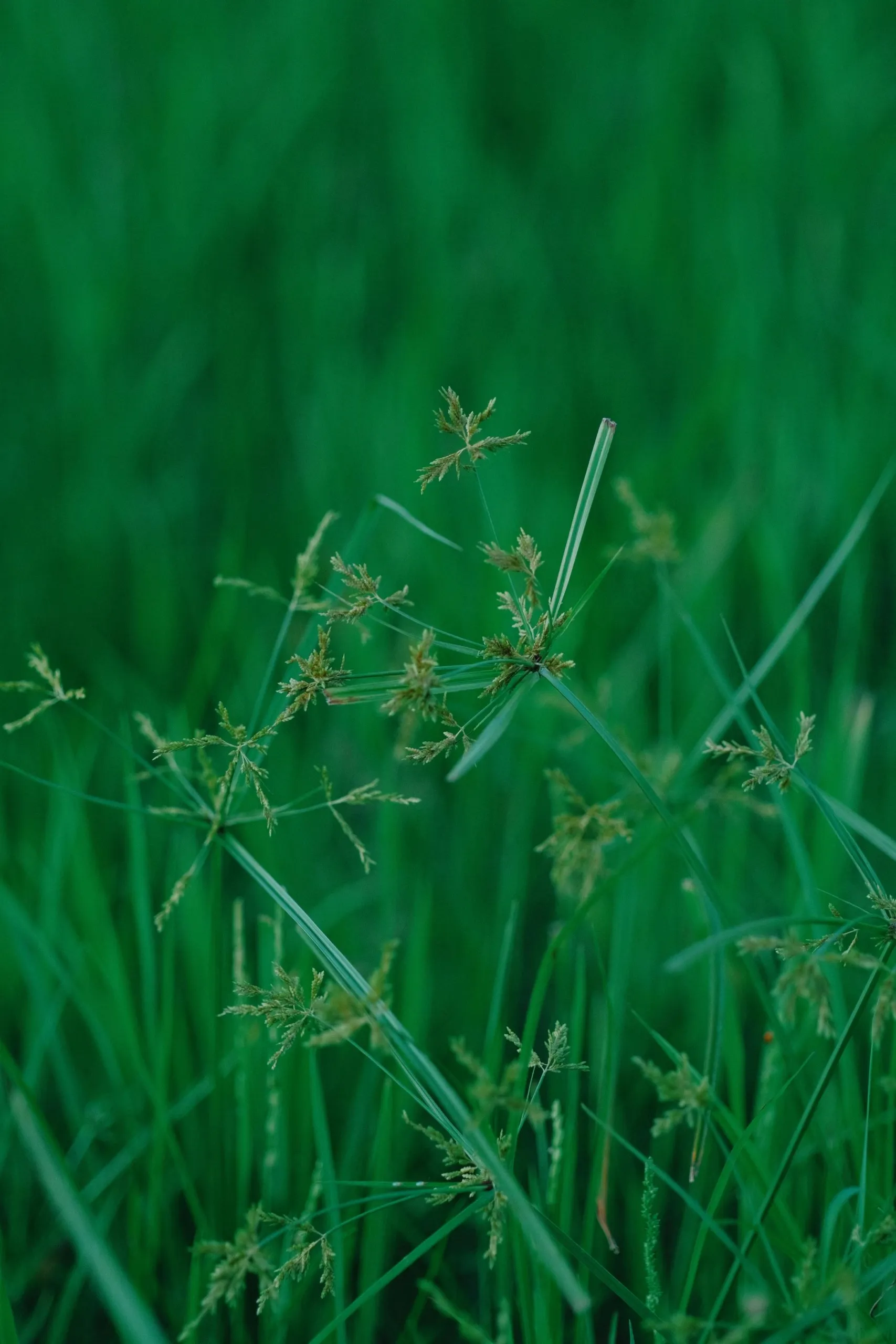
Want to be sure it’s a nutsedge weed? Check out the stem. Nutsedge stems are triangular, with distinct sides and edges that you can feel.
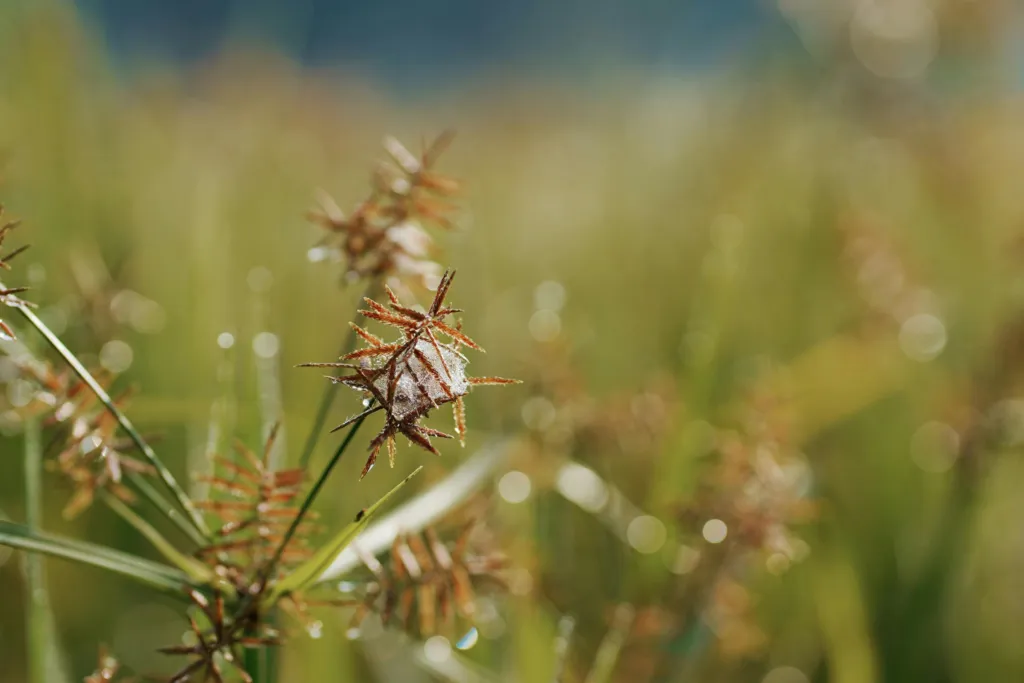
Other clues? The leaf color (more yellow-green or lime-toned than surrounding turf, particularly obvious in summer), the three-bladed leaf arrangement at each stem base, the waxy sheen on leaf surfaces that reads as a faint shine compared to the matte finish of most lawn grasses, and a spiky, umbrella-like flower cluster at the top of mature plants.
FYI: Kyllinga is a related sedge that frequently gets confused with nutsedge. However, its root system is weaker and it responds well to herbicide. If you’re not 100% sure, it’s a good idea to get a professional assessment first.
The Two Main Colors of Nutsedge
Yellow nutsedge
This is the more common variety across Ohio, Indiana, and Michigan. It tends to emerge in early to mid-summer, and its nutlets form at the tips of rhizomes. It’s most at home in poorly drained soil and thrives when lawns are mowed too short consistently. With correctly timed herbicide applications, yellow nutsedge is the more easily dealt with of the two.
Purple nutsedge
Rather than forming nutlets only at rhizome tips, it produces them along the entire length of each underground stem. This means that any disturbance to the plant (pulling, digging, even heavy foot traffic) can scatter nutlets more widely and worsen the infestation. It tends to emerge later in the season and, while more prevalent in the southeastern U.S., does show up in the warmer parts of the Midwest. Commercial-grade products and professional application timing are key.
The Conditions That Nutsedge Likes
Soil moisture
Any area where the soil stays consistently wet is prime nutsedge habitat. That could include low spots that hold water after rain, zones near downspouts or irrigation heads, and sections with dense clay that drains slowly.
Compacted soil
Most cool-season grasses struggle to develop healthy root systems in compacted ground, but nutsedge handles it well. It can grow in thin patches, high-traffic zones, and spots in your lawn that never seem to grow properly.
Seasonal timing
In Ohio and Michigan, nutsedge usually shows itself on the surface in late spring. Growth intensifies through June, July, and August. The plant remains visible through early fall and then dies back as temperatures drop. The above-ground plant disappears each winter, while the nutlets underground survive.
Why Treatment Is Harder Than It Should Be
Root depth is one piece of the puzzle. Nutsedge commonly extends 8 to 18 inches below the surface. Hand-pulling often breaks the stem well above where nutlets attach. This also stimulates dormant nutlets in the surrounding soil to activate, producing even more growth.
Plus, nutsedge spreads through seeds, rhizomes extending laterally through the soil, and nutlets. An infestation in one corner of a lawn can reach other sections through any of these routes in a single season.
And the nutlets are incredibly durable. They can remain viable through multiple treatment seasons, unaffected by herbicide that successfully kills the above-ground plant. A lawn that showed no nutsedge for an entire season can have new growth the following spring from nutlets that simply waited.
This is why nutsedge control in Ohio and Michigan requires a multi-year outlook. Progress is real and measurable, but it happens season by season rather than after a single application.
How to Get Nutsedge Under Control
Start with a confirmed identification and species determination (yellow or purple nutsedge, or kyllinga). This step determines product selection and sets realistic expectations for how many seasons of treatment will be needed. Misidentification leads to wasted applications and a continued infestation.
Skip hand-pulling entirely. It’s the most instinctive response to a visible weed and the least effective one for nutsedge. Leave the plant intact and let the herbicide do the work.
Select a selective sedge herbicide formulated to reach underground tuber structures. For cool-season grasses like fescue and bluegrass, halosulfuron-based products have a well-documented track record against both yellow and purple nutsedge. Sulfentrazone-based formulations are another established option.
Apply during the late spring to early summer window, targeting plants with fewer than five or six leaves. Young plants translocate herbicide to the root system far more effectively than established ones.
Hold off on mowing for at least 48 hours before and after application. A follow-up application 7 to 10 days after the first is also suggested
How Nutsedge Damages Your Lawn
Nutsedge competes with your grass for water, soil nutrients, and root zone space. Unfortunately, stressed cool-season grasses can lose. By the time an infestation is visible enough to seem urgent, it’s often been stealing resources from your grass for weeks.
As nutsedge outcompetes turf in affected areas, the grass thins. These zones are easy spots for other weeds to take root. And because the nutlet system continues generating new growth, visible surface improvement after herbicide application doesn’t mean the underground population has actually been eliminated. That’s why patience is your best option.
What Does Nutsedge Not Like?
Adjusting your lawn care reduces how hospitable it is for future nutsedge establishment. None of these changes eliminates the risk entirely, but each one shifts the competitive dynamic in favor of your turf.
Watering habits make a significant difference. Change your watering routine to one thorough session per week instead of multiple light cycles. This encourages deeper grass root development and reduces surface moisture.
Address drainage issues. Low spots, waterlogged zones near downspouts, and heavy clay areas that drain slowly are prime locations for nutsedge. Regrading, filling, or amending soil structure in those areas makes it more difficult for nutsedge to establish itself.
Annual aeration is especially valuable in Ohio and Michigan lawns. Compacted ground suppresses turf root development while nutsedge tolerates it reasonably well. Aeration improves the movement of water, air, and fertilizer to your grass.
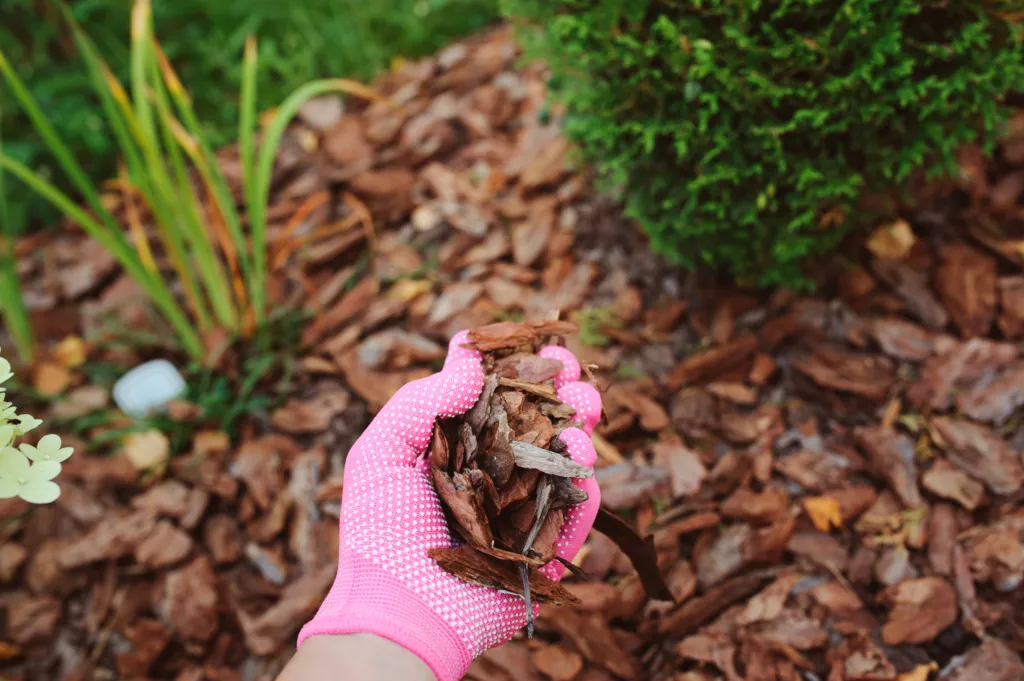
Maintaining turf density through overseeding thin areas, consistent fertilization, and correct mowing height for your grass type gives nutsedge less open territory to exploit. Also, in landscape beds and non-turf zones, three to four inches of mulch suppresses nutsedge emergence near lawn edges.
Want a Lawn Free of Nutsedge? Call NexGreen!
Professional treatment of nutsedge weeds offers commercial-grade selective herbicides not available at consumer retail. Plus, you get the experience to correctly identify the species, select the appropriate product, and build a treatment schedule. Getting the combination of product, timing, rotation, and follow-through right is key. It chips away at the infestation steadily season after season.
If nutsedge has become a recurring frustration in your yard, or if previous treatments haven’t made a difference, reach out to NexGreen! We offer pest control and lawn care services in Ohio communities around the areas of Westerville, Columbus, and Groveport, OH.
We also provide pest control and lawn care services in Michigan for areas near Sterling Heights, Rochester Mills, and Waterford, MI.
Blog Contributor: Eric Bernard
Eric Bernard serves as Area Manager for the Columbus and Groveport NexGreen locations, with 24 years of experience. He currently holds licenses in lawn, horticulture, pest, mosquito, vegetation control, and aquatics. His professional insight is shaped by leadership development, technician performance, customer retention, and decades of experience helping teams deliver strong lawn care results.