

Give Your Yard the Best Chance to Thrive All Year
Walk through any Ohio or Michigan neighborhood in spring, and you’ll notice dandelions popping up or grass struggling to become vibrant again. Spring lawn care is perhaps the most important to get your yard on track. Get it right, and your yard will thrive in the summer heat, dry spells, and everything else. Get it wrong and you’ll be playing catch-up from June onward.
The team at NexGreen is here to walk you through what actually works. And whenever you’re ready for a plan built specifically around your yard, local soil, and exact neighborhood, we’re here for that, too.
Timing, Timing, Timing
Some homeowners see a warm forecast, figure spring has arrived, and head straight to the garden center for fertilizer. The calendar says spring. The thermometer says 60°F. But the soil, which is what actually matters, might still be too low, and the grass isn’t ready for any of it.
Grass roots begin to stir when soil temperatures climb between 40–55°F. The critical threshold for applying pre-emergent weed control is at or above 55°F. Below that and annual weed seeds haven’t germinated yet, meaning the product does its job. Above it, and crabgrass has likely already beaten you to the punch.
You can pick up an inexpensive soil thermometer at most hardware stores. Another option? Check the ground beneath your feet. If it holds your weight without sinking, it’s probably ready.
General timing by region:
- Midwest and transition zones: March through May
- Southern states: February through March
- Northern states: April through May
Do too much too early and you risk pushing growth before the roots can support it. Worse still? You could give weeds a leg up on your turf.

10 Spring Lawn Care To-Dos
1. Rake & Remove Winter Debris
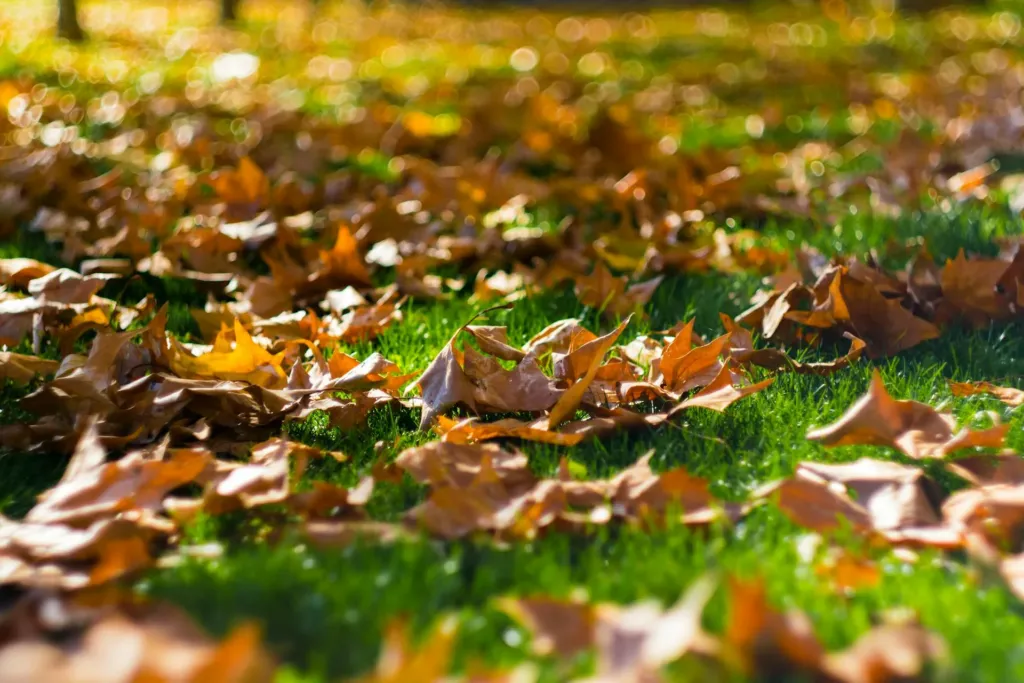
Pull out the rake before you do anything else. Matted leaves, dead grass, and fallen branches left sitting on the lawn create a damp, shadowy environment at the soil surface. Those are exactly the conditions that promote fungal disease and suppress new grass growth.
Be patient if the ground is still wet, though. Raking saturated soil can cause real damage, tearing at root zones and compressing the soil you’re trying to loosen. Wait until the lawn feels firm and the soil isn’t sticking to your shoes.
2. Run a Soil Test
Skip the guesswork. A basic soil test reveals your soil’s pH level (the target range for most lawns is 5.8–7.2) and the concentrations of the three nutrients your grass depends on most: nitrogen, phosphorus, and potassium.
If the pH is off, your grass can’t absorb nutrients efficiently. Acidic soil responds to lime. Alkaline soil responds to sulfur. And once you know your nutrient levels, you can choose a fertilizer that fills actual gaps rather than just adding more of everything.
3. Don’t Miss the Pre-Emergent Window
Pre-emergent herbicide is a preventive tool. It stops weed seeds from germinating but does nothing for weeds already visible in your lawn. For it to work against crabgrass and other spring annuals, it has to be in the ground before those seeds sprout.
The deadline? Soil temperatures hitting 55°F. Before that threshold, you’re protected. After it, you’ve missed the window for the season.
Just remember that pre-emergent doesn’t discriminate. If you apply it and then try to seed, the grass seed won’t germinate either.
- Dethatch and Aerate If Your Lawn Needs It
Look for two signs that dethatching and aeration are due: a thick, spongy feel underfoot (more than half an inch of thatch) and standing water that drains slowly or not at all after rain.
Dethatching breaks up and removes that compacted organic layer so water, fertilizer, and air can move freely through the soil. Aeration creates channels in the ground, physically relieving compaction and giving roots room to expand.
Grass type determines the right season for this:
- Cool-season lawns in Ohio and Michigan (fescue, bluegrass, ryegrass): Fall is typically the better time for aeration. Spring aeration should be minimal.
- Warm-season lawns (bermuda, zoysia, St. Augustine): Late spring is ideal, once the grass is growing actively.
5. Water Deeply, Not Frequently
An inch of water per week is the general target. That water can come from rainfall, your irrigation system, or a combination of both.
Watering shallowly every day keeps moisture near the surface, which keeps roots near the surface. Watering deeply two or three times a week trains roots to grow downward. That deeper root system is what keeps your lawn alive when July and August get brutal.
Always water in the morning. Nighttime irrigation leaves grass blades wet through the overnight hours, which is precisely the environment that fungal diseases need to establish themselves.
6. Overseed & Repair Bare Patches
Bare spots and thin areas are weed magnets. Overseeding helps your lawn fill in from within, building density that naturally suppresses unwanted growth.
For cool-season lawns in the Midwest, fall is the prime overseeding window. If you’re working with bare patches in spring, spot-seeding is a reasonable fix as well.
7. Fertilize After the Lawn is Ready
Fertilizing a dormant lawn sounds productive. It usually isn’t. Nutrients applied before active growth kick in can push rapid top growth without supporting the root system that growth depends on, and in some cases can accelerate weed germination instead of grass development.
A better approach? Wait until after the first mow of the season. Then apply a slow-release nitrogen fertilizer, which delivers nutrients gradually rather than all at once.
8. Mow Right From the First Cut
The first mow of the season should be prompted by active growth, not by a date on the calendar. Once you do get behind the mower, keep the one-third rule in mind: No single mowing session should remove more than one-third of the current blade height.
Cutting the grass too short is one of the most damaging things you can do in spring lawn care. It exposes the soil, weakens the grass plant, and creates exactly the conditions weeds are looking for.
Aim for these heights:
- Cool-season grasses: 2.5–4 inches
- Warm-season grasses: 1–4 inches
And sharpen that blade before the first cut. Dull blades shred grass instead of slicing it, leaving torn edges that brown and become vulnerable to infection.
9. Stay Ahead of Weeds, Insects, & Fungal Issues
Pre-emergent handles the big wave, but stragglers can make it through. For isolated weeds, hand-pulling when the soil is moist is surprisingly effective. For larger infestations, a selective post-emergent herbicide is the appropriate tool. Match the product to both the weed species and your grass type to avoid unintended damage.
Insect monitoring should also begin in spring. Grubs and chinch bugs are the primary culprits for damage in Midwest lawns, and preventive treatment for grubs is generally applied in late spring.
Watch for signs of fungal disease as well. These include irregular discolored patches, soft mushy sections of turf, or grass that looks like it’s struggling for no obvious reason.
Not sure what you’re looking at? NexGreen serves homeowners across Ohio and Michigan. We’d be glad to take a look!
10. Recognize When Professional Help Makes Sense
Professional lawn care delivers a few things that the DIY approach genuinely can’t replicate at scale. For instance, locally calibrated treatment timing, treatment programs based on your actual soil conditions and grass species, and the kind of consistent seasonal follow-through that a single spring push rarely achieves.
Perhaps more importantly, trained lawn care technicians catch things early. Subtle changes in grass color, texture, or growth pattern that go unnoticed by most homeowners often signal that small problems exist…and may grow without intervention.
Why Is Early Spring Lawn Care Worth It?
Winter is genuinely rough on a lawn, even when you can’t see the damage. Freeze-thaw cycles compact the soil. Grass sits dormant for months, leaving root systems thin and shallow. Thatch can become dense enough to physically block water and nutrients from getting where they need to go.
And while your lawn has been dormant, weeds have been waiting. So early spring lawn care is fundamentally about getting your grass into active, healthy growth before weeds, insects, and summer heat have the opportunity to gain the upper hand.
Pay Attention to Your Grass Type
Not all spring care advice applies equally across lawn types.
The cool-season grasses we have in Ohion and Michigan (Kentucky bluegrass, tall fescue, perennial ryegrass) do most of their growing in the cooler months of spring and fall. Spring is when they recover and build strength. Treat them gently coming out of winter as aggressive early treatments can set back recovery rather than accelerate it.
Frequently Asked Questions
-
Is spring or fall better for aeration?
For cool-season lawns in Ohio and Michigan, it’s fall. For warm-season grass, late spring once the lawn is actively growing.
-
Can overseeding and pre-emergent happen at the same time?
They can’t because pre-emergent prevents all seed germination, including grass seed. Plan overseeding for fall or target only small bare patches in spring while keeping pre-emergent away from those areas.
-
Which fertilizer should I use this spring?
A slow-release nitrogen product, selected based on what your soil test reveals rather than a standard package recommendation.
-
When is the right time to begin spring lawn care in the Midwest?
Once the ground is thawed, firm, and consistently dry enough to walk on without leaving marks. Pre-emergent and fertilization timing should be guided by soil temperature (55°F) rather than calendar date.
-
How much water does a spring lawn need?
About one inch per week total. Water less frequently and more deeply to encourage strong root development.
Six Mistakes That Undo Good Intentions
- Watering in the evening creates overnight moisture that fuels fungal growth
- Aerating a cool-season lawn at the wrong time can do more harm than good
- Treating without testing the soil first may solver a problem that doesn’t exist while ignoring the one that does
- Fertilizing before dormancy breaks will feeds weeds, not grass
- Running pre-emergent and overseeding at the same time cancels out one or the other
- Cutting the grass too short exposes soil, weakens turf, and invites in weeds
-
Your Best Lawn Ever Starts Now!
Consistent spring lawn care isn’t complicated, but it does require doing the right things in the right order. Clean up first. Soil test early. Time your pre-emergent carefully. Mow high. Water smart. Do those things and your lawn is set up for a strong season.
If you’d rather have a team of local pros keeping your yard in great shape all year long, NexGreen is ready. We proudly serve communities in the Midwest, ensuring high-quality lawn care services in these areas:
Blog Contributor: Eric Bernard
Eric Bernard serves as Area Manager for the Columbus and Groveport NexGreen locations, with 24 years of experience. He currently holds licenses in lawn, horticulture, pest, mosquito, vegetation control, and aquatics. His professional insight is shaped by leadership development, technician performance, customer retention, and decades of experience helping teams deliver strong lawn care results.